For clinics

Objective follow‑up for psychiatric clinics.

Polarity gives your team a clear view of how outpatients are doing between visits, using data they already carry with them: their phone and, if they choose, a wearable.

Talk to us
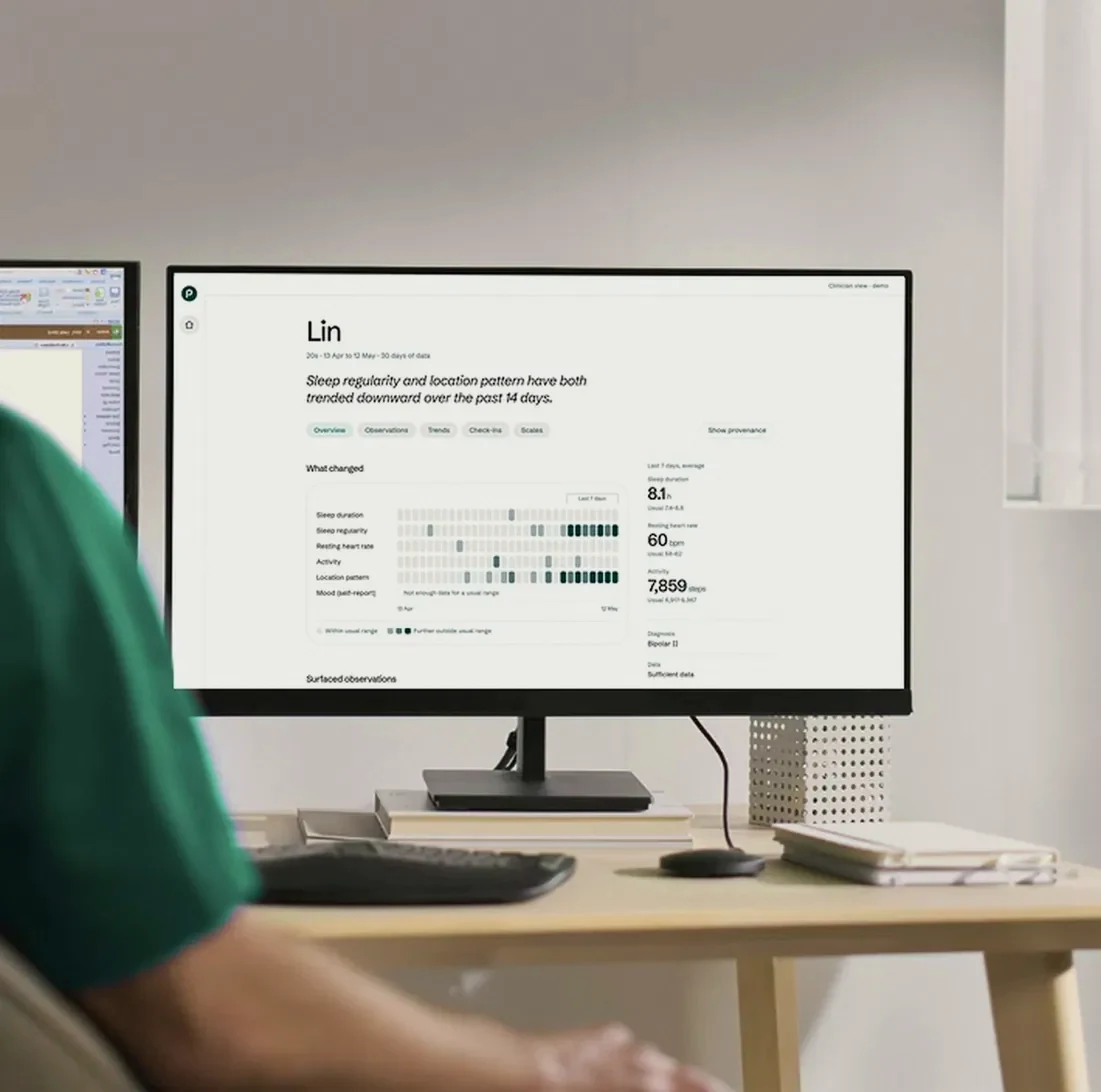
The Polarity clinician view on a desk monitor in a clinic office, with example data

Start every visit with a fuller picture.

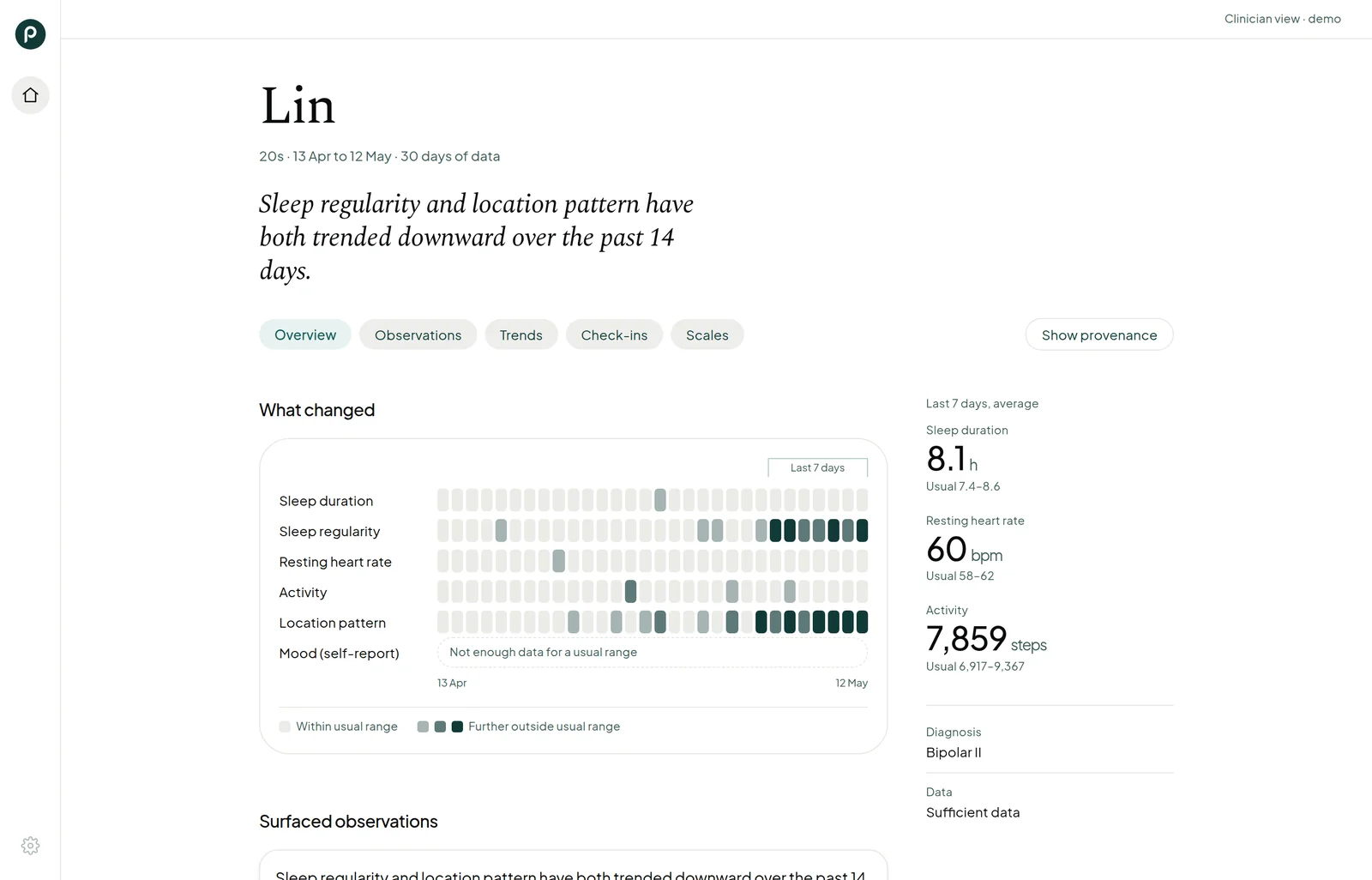
The Polarity clinician view: a summary sentence, a day-by-day timeline of changes per signal, and key figures, with example data

The clinician view in the Polarity prototype, with example data.

See what changed
Each visit begins with an overview of what has changed since last time: sleep, daily rhythm, activity and self-reports, in plain language.
Follow up between visits
Changes are visible as they build up, so your team can decide when a conversation is worth having sooner.
Fits existing routines
Patients use their own phone, with a wearable as an option. No hardware to buy, and a couple of minutes of check-ins a day.

Inside Polarity

From the patient's phone to the clinician's screen.
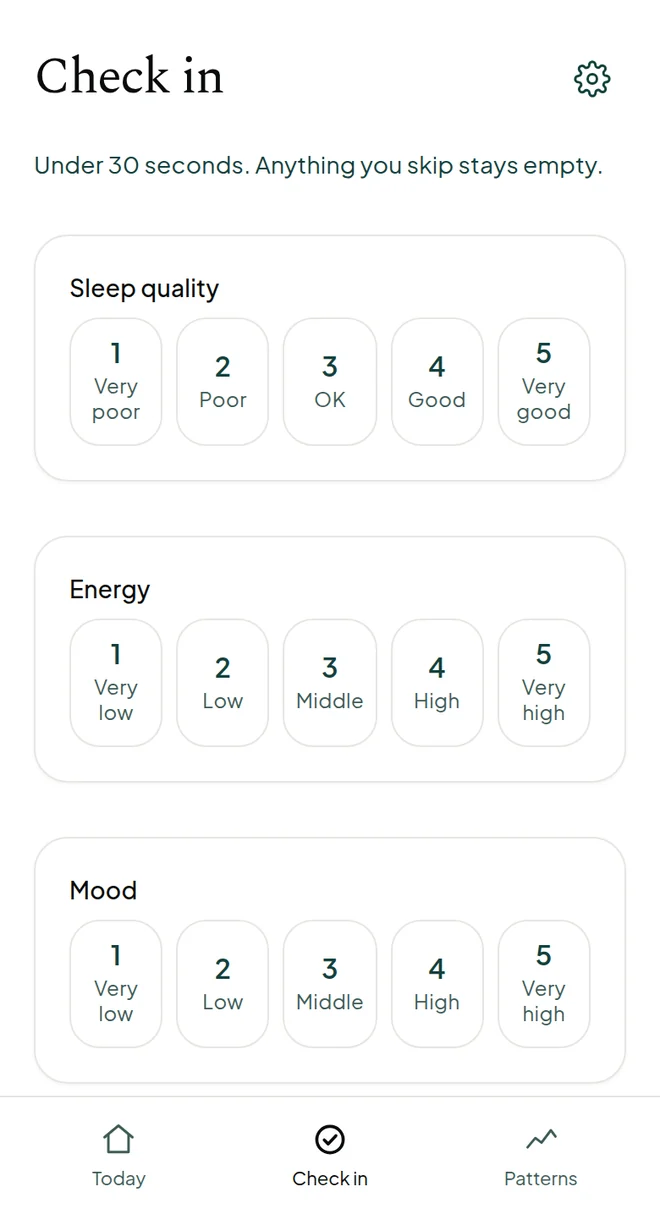
The check-in in the Polarity app: sleep quality, energy and mood on a scale from 1 to 5
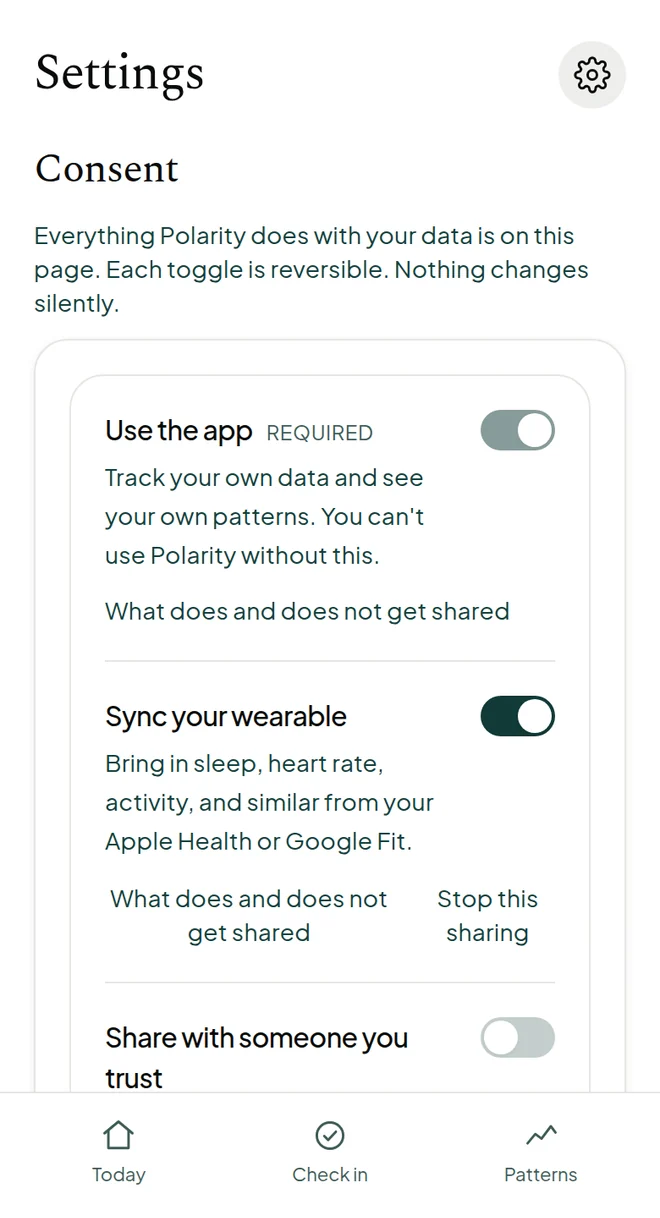
The consent page in the Polarity app, with a separate switch for each kind of sharing

Check-ins in under 30 secondsSleep quality, energy and mood on a five-point scale, with an optional note. Anything skipped stays empty.

Consent, one switch at a timePatients decide what is shared, and with whom. Every switch can be turned off again, and nothing changes silently.
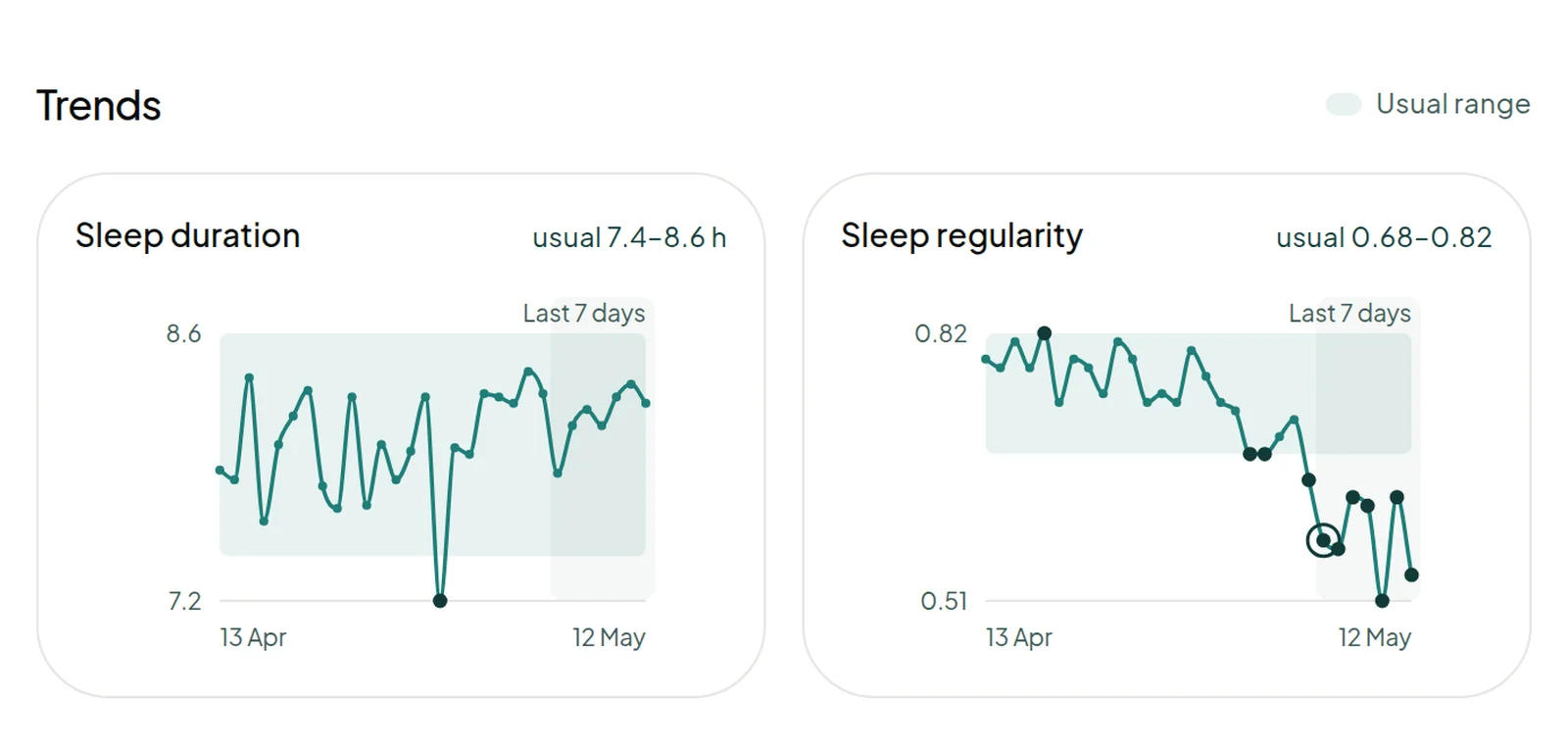
Trend charts in the clinician view for sleep duration and sleep regularity, each with the patient's usual range shaded, with example data
Every signal against the patient's usual rangeThe shaded band is each patient's own normal. A clinician can see at a glance when a signal moves outside it, and for how long.

Screens from the Polarity prototype, with example data.

Questions clinics ask

What does getting started look like?
  1. Scope. We agree on a patient group and the team that will use Polarity, for example outpatients with mood disorders.
  2. Onboarding. Patients install the app, choose which signals to share and give their consent. Clinicians get access to the clinician view.
  3. Baseline. During the first weeks, Polarity learns each patient's usual range. Observations appear once there is enough data.
  4. Follow-up. Clinicians use the overview at visits and check in between them, within the routines the clinic already has.
Which patient groups is Polarity for?

Polarity starts with adult outpatients with mood disorders, such as depression and bipolar disorder. Because each person is compared with their own baseline, the approach does not depend on a specific diagnosis.

Does Polarity diagnose or recommend treatment?

No. Polarity describes changes relative to each person's own baseline, in plain language. Assessment and decisions stay with the clinician.

Which devices are supported?

Polarity works with the phone alone. Wearables are optional, and each supported device is validated before it is added to the published list.

How is data handled?

Each signal is shared only with the person's consent, which can be withdrawn at any time. Polarity is designed for GDPR, with personal data stored and processed within the EU.

How is Polarity priced?

Per person monitored per year. There is no hardware to buy.

How can our clinic get involved?

We're looking for psychiatric clinics in the Nordics and Germany interested in upcoming studies and pilots. Polarity is in development and not yet available for clinical use.